Tennessee Governor Bill Lee Signs Legislation Banning Sweepstakes Casinos
Zoe Jenkins · May 22, 2026

Tennessee Governor Bill Lee Signs Legislation Banning Sweepstakes Casinos
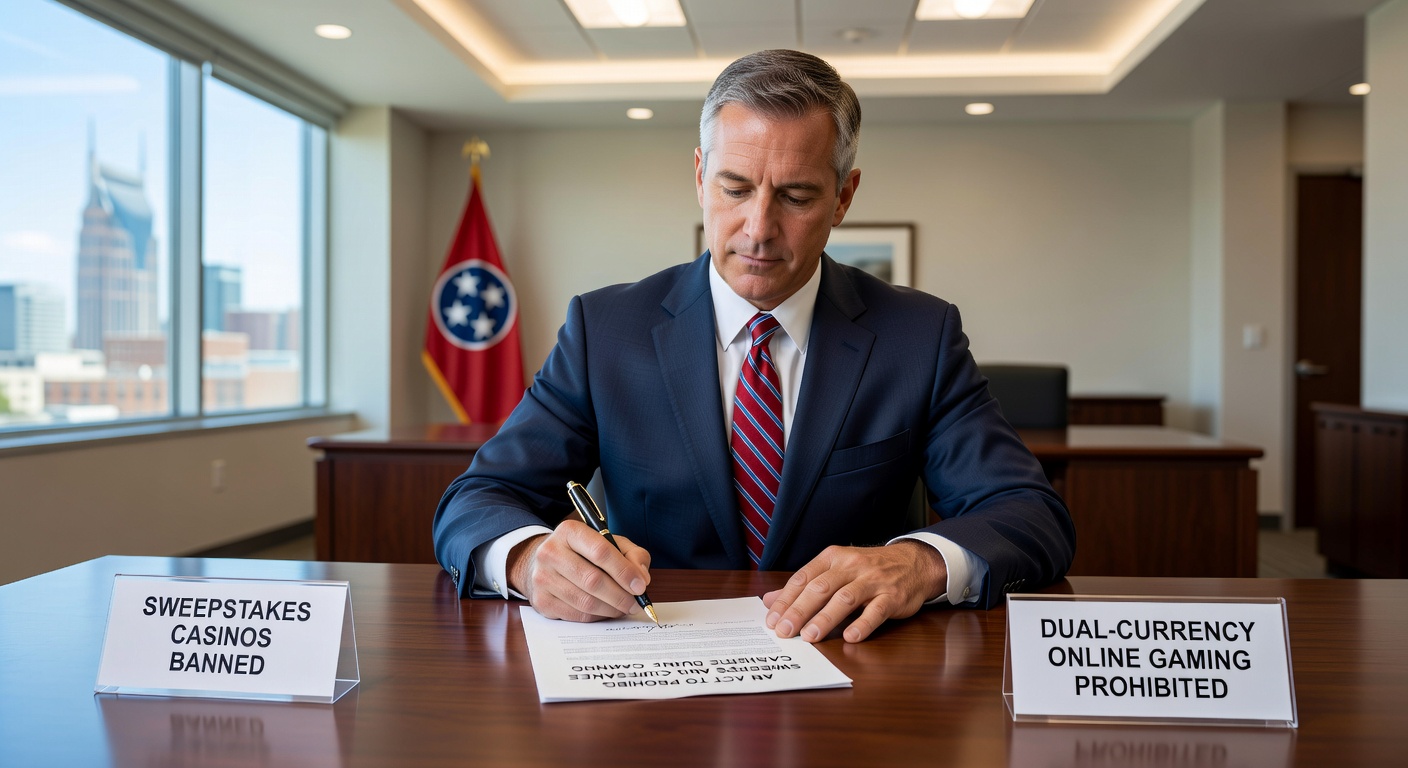
Tennessee Governor Bill Lee signed legislation that prohibits dual-currency online gaming platforms known as sweepstakes casinos, and this action establishes the prohibition as state law. The measure follows earlier cease-and-desist orders issued by the state attorney general along with prior legislative steps that classified such operations as unlawful gambling under existing consumer protection statutes. Officials integrated the new provisions into broader regulatory frameworks that already address unlicensed gambling activities across the state.
Background on the Legislative Process
The bill advanced through both chambers of the Tennessee General Assembly before reaching the governor's desk, and lawmakers incorporated language that explicitly targets platforms operating with dual-currency models where players purchase virtual credits that convert into sweepstakes entries. Sponsors cited enforcement challenges that had persisted despite previous attorney general directives, and the final text aligns the state's approach with measures already adopted in neighboring jurisdictions. Data from regulatory filings indicate that several operators received formal notices prior to the bill's passage, which set the stage for the statewide prohibition.
Alignment with Actions in Other States
Similar enforcement patterns have emerged in multiple jurisdictions where attorneys general have issued warnings and pursued court orders against unregulated sweepstakes sites. Tennessee's new statute mirrors provisions enacted elsewhere that redefine consumer protection rules to encompass these platforms, and coordination among state regulators has increased in recent months. Reports compiled by industry monitoring groups show that at least five additional states initiated parallel reviews of dual-currency operations during the same legislative cycle, creating a consistent regional stance against unlicensed offerings.
Enforcement mechanisms outlined in the signed legislation authorize the attorney general to seek injunctive relief and civil penalties against any entity found operating in violation of the ban, while the measure also directs the Tennessee Department of Revenue to monitor compliance through existing tax reporting channels. Observers note that the statute includes definitions that distinguish prohibited sweepstakes models from licensed charitable gaming activities, which remain unaffected by the changes.
Details of the Signed Provisions
The legislation specifies that any online platform offering games of chance through sweepstakes entries funded by currency purchases falls under the prohibition, and it requires immediate cessation of such services once the law takes effect. Governor Lee's office confirmed the signing through an official statement that referenced the need to maintain uniform application of gambling statutes across digital and physical environments. Implementation timelines outlined in the bill provide a transition period for operators to wind down activities, after which active enforcement begins.
State records indicate that prior cease-and-desist actions had already prompted several platforms to restrict access for Tennessee residents, and the new law formalizes those restrictions into permanent statutory language. Analysts tracking regulatory filings report that compliance rates among notified operators reached significant levels before the governor's signature, which reduced the anticipated number of enforcement cases once the prohibition activates.
Consumer Protection Context
The consumer protection framework referenced in the legislation builds on existing statutes that classify certain promotional sweepstakes as gambling when entry requires a purchase, and Tennessee regulators have applied this interpretation consistently in prior cases. Educational materials distributed by the attorney general's office explain the distinction between lawful free-to-play sweepstakes and those that incorporate paid currency elements, which helps residents understand the boundaries now reinforced by statute. Figures from state consumer complaint databases show a measurable uptick in reports related to sweepstakes platforms in the quarters leading up to the bill's passage.
Industry associations representing licensed gaming operators welcomed the clarification provided by the new law, noting that it levels the competitive field by removing ambiguity around unregulated platforms. The measure also includes reporting requirements that direct the Department of Revenue to compile annual summaries of enforcement actions, which will be made available to the public through standard government channels.
Current Implementation Timeline
The signed legislation establishes that the prohibition becomes effective upon the governor's signature, with full enforcement provisions activating after a designated grace period that allows operators to adjust their systems. Regulatory staff at the attorney general's office have begun preparing guidance documents for businesses and consumers alike, and these materials will detail reporting procedures for suspected violations. Coordination with payment processors and internet service providers forms part of the compliance strategy outlined in accompanying administrative rules.
As of May 2026, state agencies continue to process the final administrative steps required for seamless rollout, and preliminary data from similar bans in adjacent states suggest that resident access to prohibited platforms declines sharply once enforcement begins. Tennessee officials have indicated that ongoing monitoring will rely on existing inter-agency agreements that facilitate information sharing with federal authorities when cross-border elements appear in investigations.
Conclusion
The signing by Governor Bill Lee completes a sequence of regulatory and legislative actions that began with attorney general cease-and-desist orders and culminated in statutory prohibition of sweepstakes casinos. This development places Tennessee among states that have updated their consumer protection statutes to address dual-currency online gaming models directly. Continued enforcement will depend on the mechanisms now embedded in state law, which authorize civil remedies and require periodic public reporting of compliance outcomes.