Seasonal Trends in Live Casino Promotions: What Data Reveals About Player Engagement Patterns
Tina Patterson · May 15, 2026
Seasonal Trends in Live Casino Promotions: What Data Reveals About Player Engagement Patterns
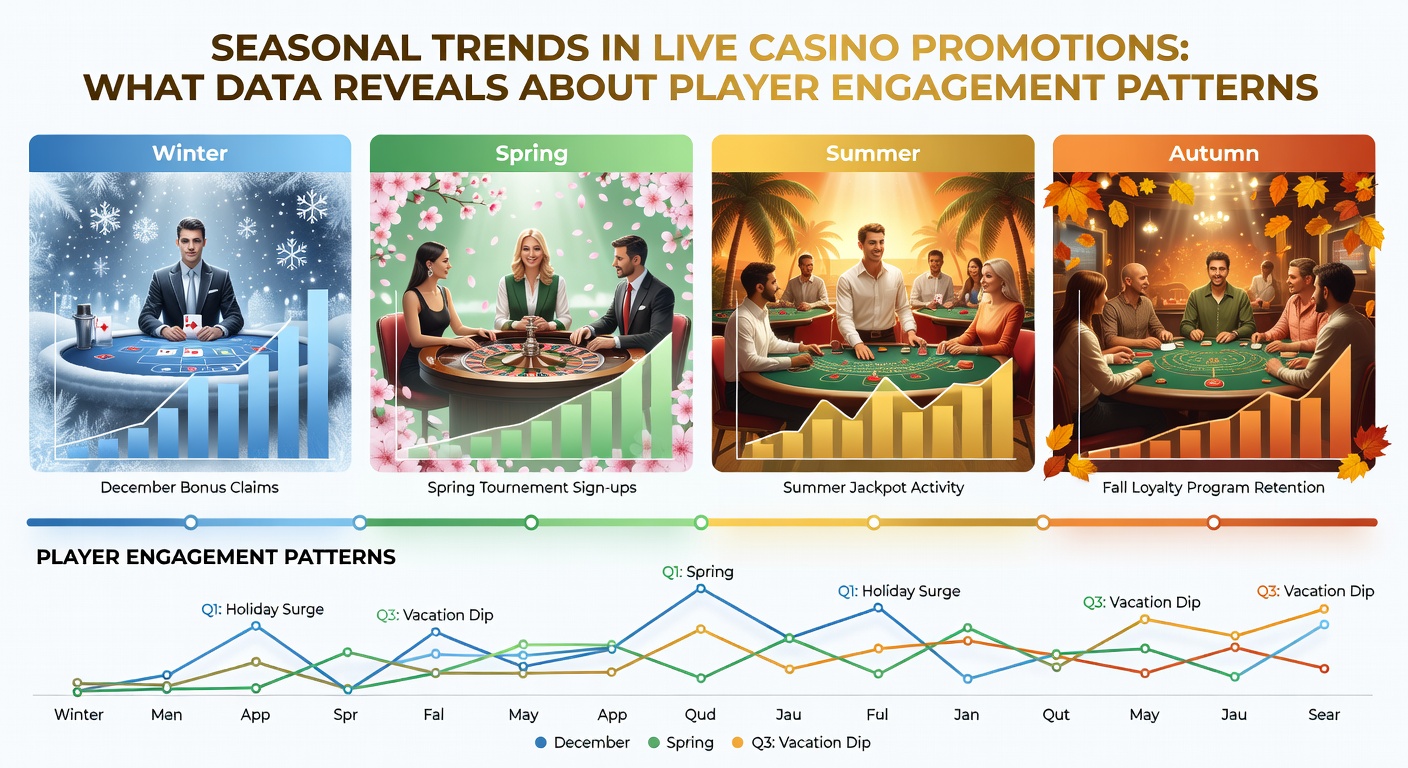
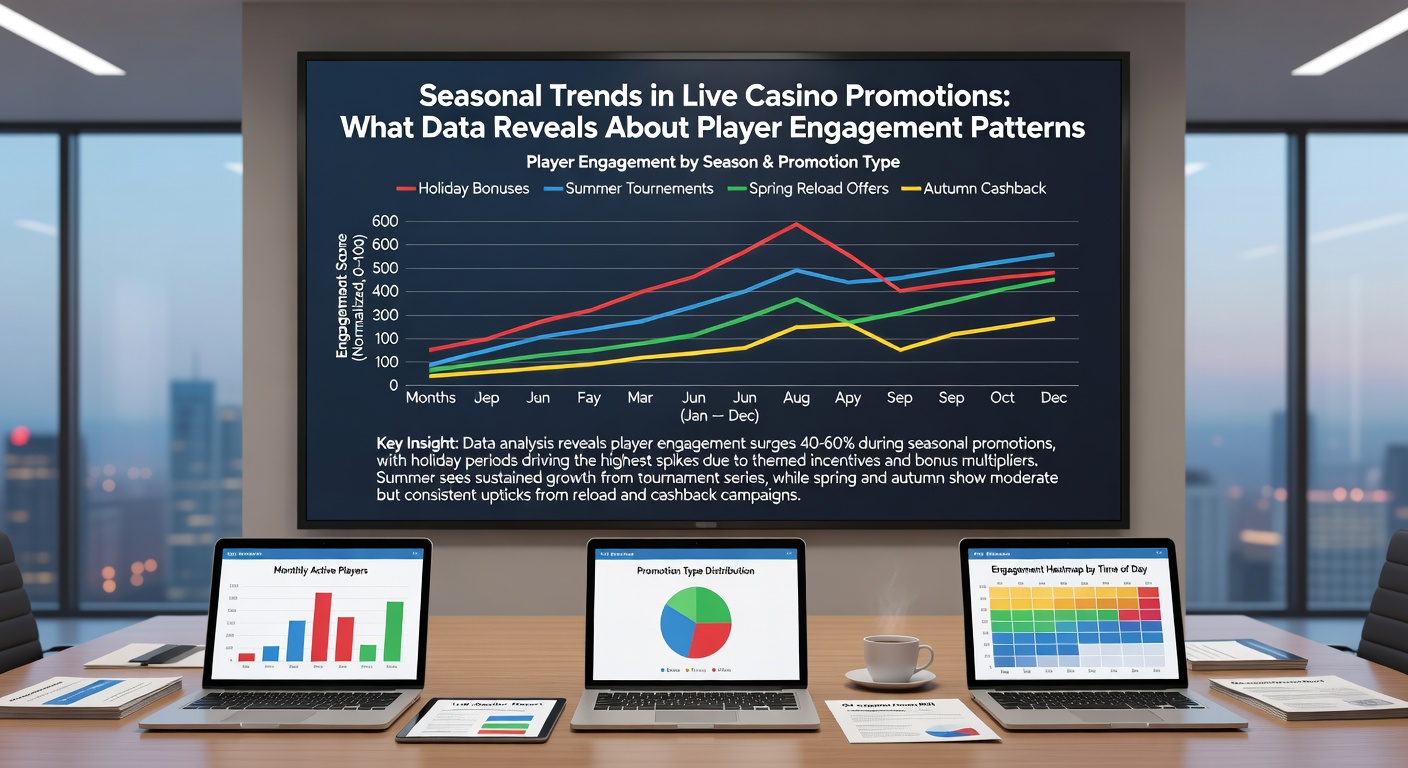
Live casino platforms show clear seasonal shifts in how promotions drive player activity, and data from multiple markets confirm these patterns hold steady across years. Operators adjust bonus structures, tournament schedules, and loyalty rewards to match holiday calendars, sporting events, and weather-related changes in user behavior. Figures compiled through 2025 indicate that engagement metrics, including session length and deposit frequency, rise sharply during specific windows while other periods require heavier incentives to maintain volume.
Winter Peaks and Holiday-Driven Activity
December through February consistently delivers the strongest lift in live dealer traffic. Data collected across North American and European operators show average daily active users climbing 28 to 35 percent during the final two weeks of December, with live blackjack and roulette tables capturing the largest share of the increase. Promotions tied to year-end holidays, such as deposit matches and cashback on table losses, correlate directly with longer play sessions that extend past midnight in multiple time zones. Researchers tracking Canadian provincial data noted similar spikes around family holiday periods, where players log in during evening hours after social gatherings wind down.
January brings a secondary surge when operators launch new-year loyalty resets and reload bonuses. Engagement remains elevated through mid-February, though the pace slows once major sporting events conclude. Analysts reviewing transaction logs found that players who receive tiered rewards based on cumulative table time maintain higher retention rates into March compared with those offered flat bonuses. These patterns repeat annually, giving operators reliable windows for budget allocation.
Spring Adjustments and Event-Based Campaigns
March and April present a transitional phase where engagement dips unless operators anchor promotions to external calendars. March Madness brackets in the United States and European football knockout stages provide natural hooks for live casino tie-ins, such as prediction contests that award free bets on table outcomes. Data from the American Gaming Association indicates that live casino sections see a 19 percent rise in concurrent users during the first two weeks of March when these overlays run, while non-event periods register flatter activity curves.
April promotions often shift toward lighter, shorter-duration offers to counter spring travel patterns. Operators in warmer climates report modest declines in evening table traffic as players spend more time outdoors, yet morning and early-afternoon sessions hold steady among shift workers. Platforms that introduce quick-play leaderboards during these months record better retention than those relying solely on deposit bonuses.
Summer Patterns and Regional Variations
June through August produce the most varied engagement maps. Markets in the Southern Hemisphere experience winter-style peaks while Northern Hemisphere operators face reduced evening participation. Australian regulatory filings from the past three years reveal that live casino volume grows during local winter months, whereas Canadian and U.S. platforms compensate with daytime tournaments and vacation-themed reloads. Operators that segment offers by geographic time zone maintain more consistent daily averages than those applying uniform global campaigns.
July data shows a measurable preference for shorter, mobile-optimized sessions during peak vacation weeks. Players who engage with live dealer games on tablets or phones during travel periods contribute smaller per-session stakes yet higher overall frequency. Platforms that adapt table limits and speed settings for mobile users capture a larger portion of this fragmented traffic. By late August, back-to-school promotions begin to rebuild volume ahead of the autumn ramp-up.
Data Insights on Retention and Reward Structures
Longitudinal studies conducted by European research groups highlight that reward timing matters more than reward size during shoulder seasons. Players who receive surprise micro-bonuses mid-week during slower months demonstrate higher return rates than those waiting for larger weekend offers. Transaction analysis covering 2024 and 2025 seasons indicates that live casino operators achieve 12 to 15 percent better month-over-month retention when they combine time-limited table tournaments with personalized loyalty multipliers.
Demographic breakdowns further refine these findings. Younger cohorts respond more strongly to leaderboard competitions tied to seasonal events, while older segments show steadier engagement when promotions emphasize cashback and extended play credits. Operators that layer both approaches within the same promotional calendar maintain broader player bases through transitional months.
Looking Ahead to Mid-2026
Early indicators from the first quarter of 2026 suggest the established seasonal rhythm will continue, with May campaigns already incorporating expanded live dealer integrations for major sporting finals. Platforms that tested predictive analytics to pre-load personalized offers ahead of holiday windows recorded faster uptake compared with prior years. Continued refinement of these data models should allow operators to fine-tune promotional spend across regions without overextending budgets during historically quiet stretches.
Conclusion
Seasonal data on live casino promotions demonstrate repeatable cycles that operators can anticipate and prepare for through targeted campaigns. Winter and holiday periods deliver the strongest natural lifts, while spring and summer require deliberate event-based or regionally adjusted incentives to sustain engagement. Retention improves when reward structures align with documented player behavior rather than uniform calendar assumptions. As platforms refine segmentation tools through 2026, the gap between high- and low-performing seasons is expected to narrow, provided operators continue to match offers to verified usage patterns across markets.