How Cluster Pay Systems Alter Expected Value Calculations in Multi-Game Casino Portals
Felix Sullivan · Aug 21, 2026
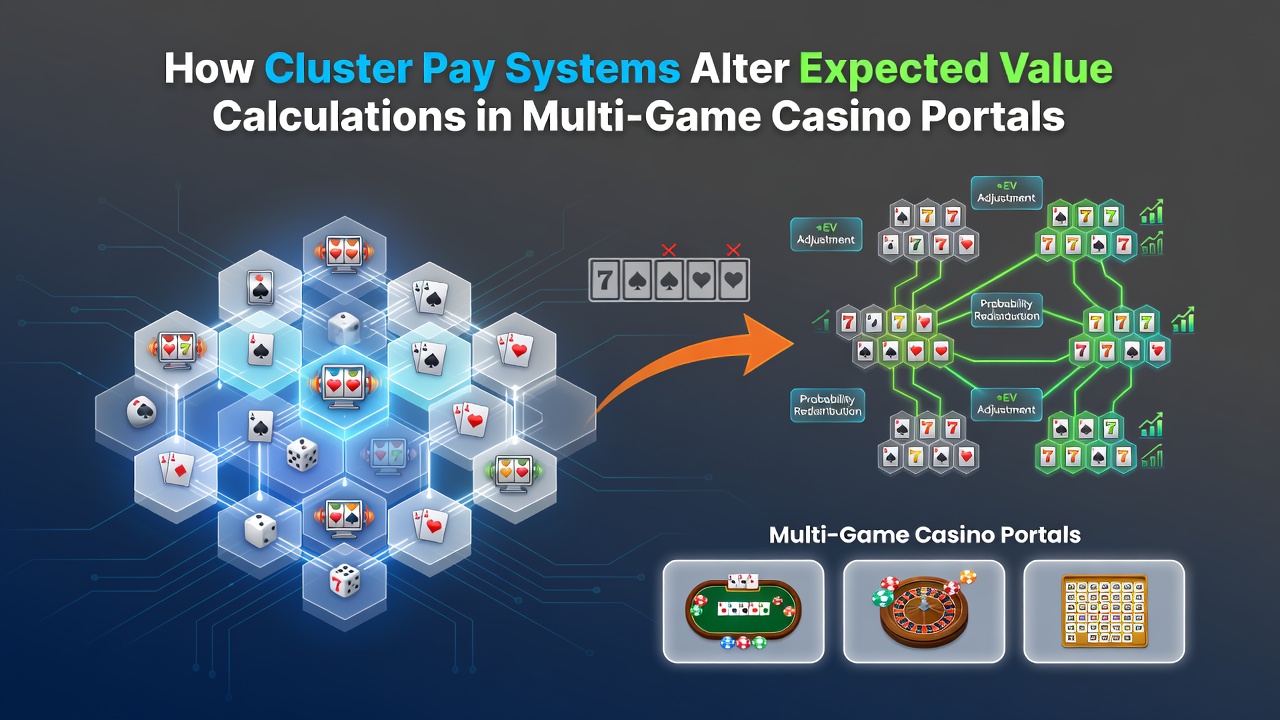
How Cluster Pay Systems Alter Expected Value Calculations in Multi-Game Casino Portals
Cluster pay systems replace traditional paylines with requirements for groups of matching symbols to land in adjacent positions on the reels, and this shift directly changes how expected value gets calculated in slots offered through multi-game casino portals. Observers note that the adjacency rule creates different probabilities for winning combinations compared with fixed line structures, which means return-to-player percentages and volatility profiles require fresh modeling each time a portal adds new titles. Data from August 2026 shows that several major operators adjusted their bonus allocation formulas after cluster-based games began to dominate player selections in networked environments.
Mechanics of Cluster Pays Versus Line-Based Systems
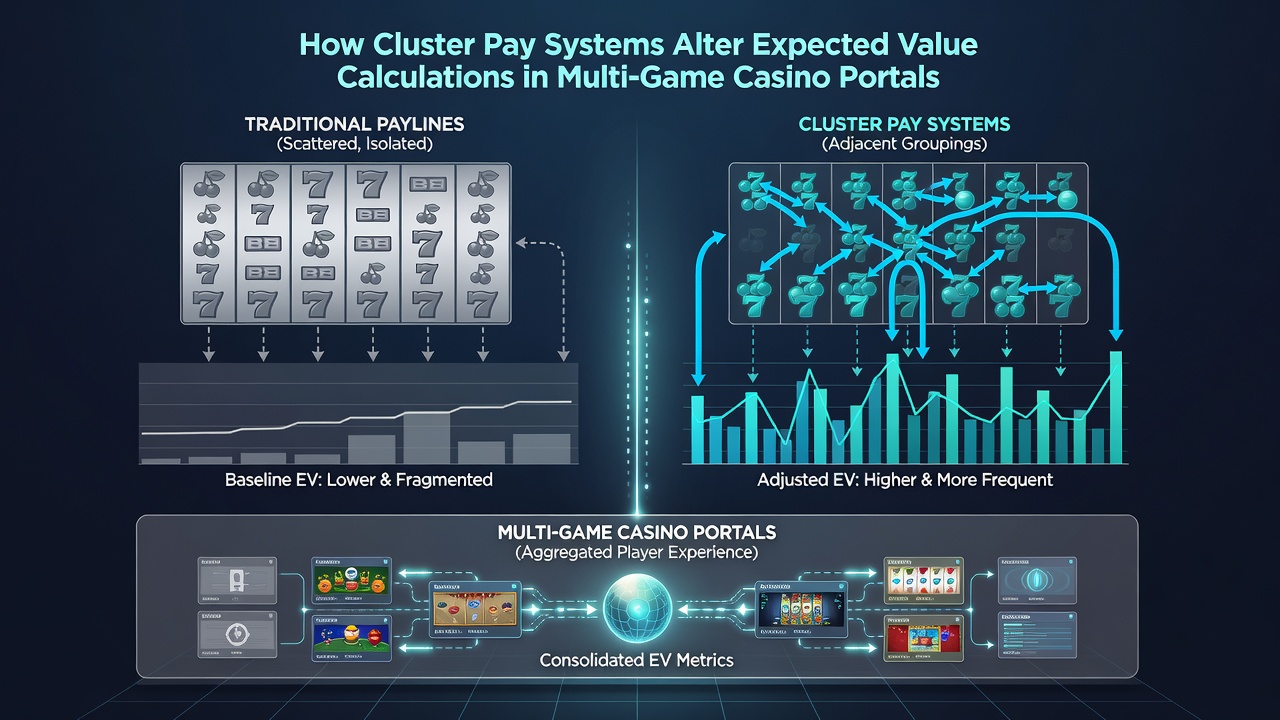
Traditional slots award payouts when symbols align on predetermined lines, yet cluster pays trigger whenever a minimum number of identical symbols touch horizontally or vertically without needing specific line paths. Researchers have documented that this adjacency mechanic increases hit frequency in many titles because multiple overlapping clusters can form on a single spin, while the absence of line restrictions also allows symbols to contribute to several clusters at once. Those who study reel mathematics point out that symbol weighting must be recalibrated, since the same icon distribution produces higher or lower expected values depending on whether the engine checks lines or clusters.
Multi-game portals compound the issue because players move between cluster-pay and line-pay titles within the same session, and operators track aggregate expected value across the entire library to set promotional parameters. Figures released in mid-2026 indicated that portals with mixed game types revised their loyalty point accrual rates after noticing that cluster-pay sessions produced different redemption patterns than line-based ones.
Recalculating Expected Value in Cluster Environments
Expected value in slots equals the sum of each possible outcome multiplied by its probability and payout, but cluster systems expand the outcome space because cluster size directly affects multiplier values in many games. Analysts observe that a five-symbol cluster might pay a base amount while a nine-symbol cluster pays several times more, creating a payout distribution that skews calculations toward larger but less frequent wins in some titles. Studies of reel weighting systems show that developers often increase the frequency of low-value symbols to balance the higher hit rates, which in turn alters the overall expected value when the same reel strips appear in a line-pay version of the game.
Portal operators therefore run separate simulations for each mechanics type before listing games together, since cross-game bonus features such as shared progressive pools rely on accurate per-game expected values to remain sustainable. Data collected through August 2026 revealed that several networks updated their progressive contribution percentages after cluster-pay titles generated higher average cluster sizes than initial models predicted.
Portal-Level Implications and Player Behavior Patterns
Multi-game casino portals integrate dozens or hundreds of titles under one account system, and the presence of cluster-pay games changes how expected value flows through loyalty and bonus engines. Observers note that players who switch frequently between mechanics types experience different session lengths and wager distributions, which affects the accuracy of lifetime-value projections used for targeted promotions. Research indicates that cluster-pay games often produce steadier small wins interspersed with occasional large clusters, leading operators to adjust free-spin and cashback offers to maintain consistent engagement metrics across the catalog.
Regulatory filings from the Alcohol and Gaming Commission of Ontario highlight that platforms operating in multiple jurisdictions must document these mechanics differences when submitting game approval packages, since cluster systems can shift the house edge distribution even when advertised return-to-player percentages remain identical to line-based counterparts. Alcohol and Gaming Commission of Ontario reports from 2026 further note that testing protocols now require separate volatility indexes for each pay mechanic before games enter shared portal environments.
Recent Data Trends Observed in August 2026
Portal analytics compiled through August 2026 demonstrate that cluster-pay titles accounted for a rising share of total handle in several North American and European networks, prompting fresh reviews of expected value assumptions embedded in bonus engines. Those reviewing the figures found that average cluster sizes trended higher in games with cascading features, which increased the frequency of multiplier applications and required operators to recalibrate contribution rates to progressive pools. Industry reports from the same period also recorded shifts in device-specific play patterns, with mobile users favoring cluster-pay titles at higher rates than desktop users, a distinction that influences how portals allocate marketing resources across game categories.
Conclusion
Cluster pay systems introduce adjacency-based winning conditions that expand outcome possibilities and require updated expected value models compared with traditional payline structures. Multi-game casino portals must account for these differences when mixing game types, setting bonus parameters, and projecting player value across libraries. Data gathered through August 2026 confirms that operators continue to refine their calculations as cluster-pay titles gain prominence, ensuring that aggregated return metrics remain aligned with regulatory standards and sustainable promotional frameworks.